

Suicide is the most tragic outcome of the adolescent mental health crisis. It’s crucial to determine how widespread the increases in adolescent suicide are, both to understand the scope of the problem and to figure out what might be causing it. If the rise is linked to social media, for example, we’d expect increases in most industrialized countries, not just the U.S., and larger increases among girls given that they spend more time on social media and appear to be more affected by that time.
We already know that anxiety, low life satisfaction, emotional distress, poor mental health, and loneliness have increased among adolescents and/or young adults in many countries around the world. But critics have often argued that suicide rates are the exception to this trend – that adolescent suicide rates may have increased in the U.S., but not internationally. Studies using the Global Burden of Disease database have muddied the waters as that database contains only estimates of suicide rates, not actual rates.
In a previous post (also cross-posted on After Babel), I gathered recent studies on trends in the adolescent suicide rate in Europe, South Korea, and Japan, showing that the suicide rate was increasing for adolescent girls in most countries.
I was also able to find data on the adolescent suicide rate over time in Australia, Canada, and the UK (specifically, England and Wales). I’ve combined rates in 5-year blocks to make the overall trends more clear; these are lower-population countries with more variability in the suicide rate from year to year. I was not able to include New Zealand as they only provide suicide rate statistics broken down by sex for broad age groups (for example, 15 to 24), so we can’t see the data for adolescents alone. I’ll cover the U.S. in a future post.
A beach at Rottnest Island, off the coast of Western Australia
Let’s start with Australia. The suicide rate of 15- to 19-year-old girls rose 69% from 2005-09 to 2015-19 (before the COVID-19 pandemic) and then declined slightly, still 53% higher than in the late 2000s (see the red line in Figure 1). Suicide rates for boys (the blue line) rose 44% from 2005-09 to 2015-19 but then declined during and after the pandemic, leaving them 17% higher than in the late 2000s.
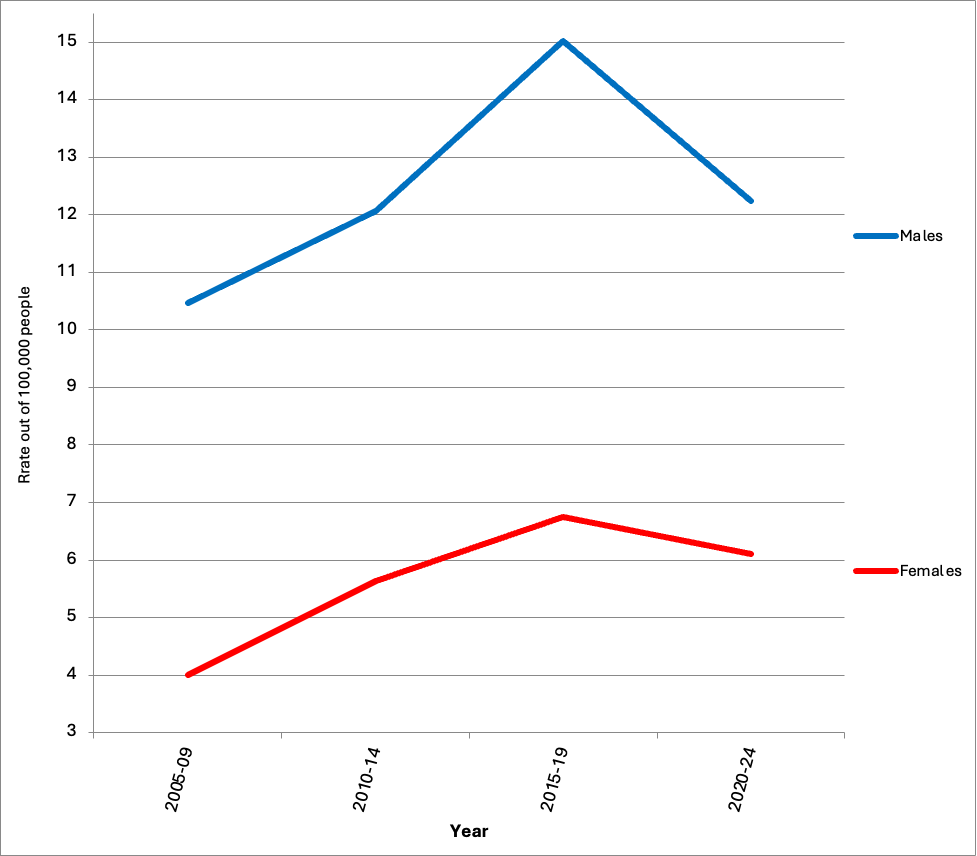
Figure 1: Suicide rates of 15- to 19-year-olds, Australia, by sex, 2005-2024
So while the suicide rate is retreating among adolescent boys in Australia, rates for adolescent girls are still much higher than they were 15 years ago.

A red sled in the window of an apartment in Toronto, Ontario, Canada
A similar but even more gender-discordant pattern appears for the suicide rates of 10- to 19-year-olds in Canada (the data are from the supplemental tables of this article.) Among girls, suicide rates rose 40% between 2005-09 and 2015-19 and were still 24% higher in 2020-23. For boys, though, suicide rates rose between 2005-09 and 2015-19 before falling substantially into the early 2020s.
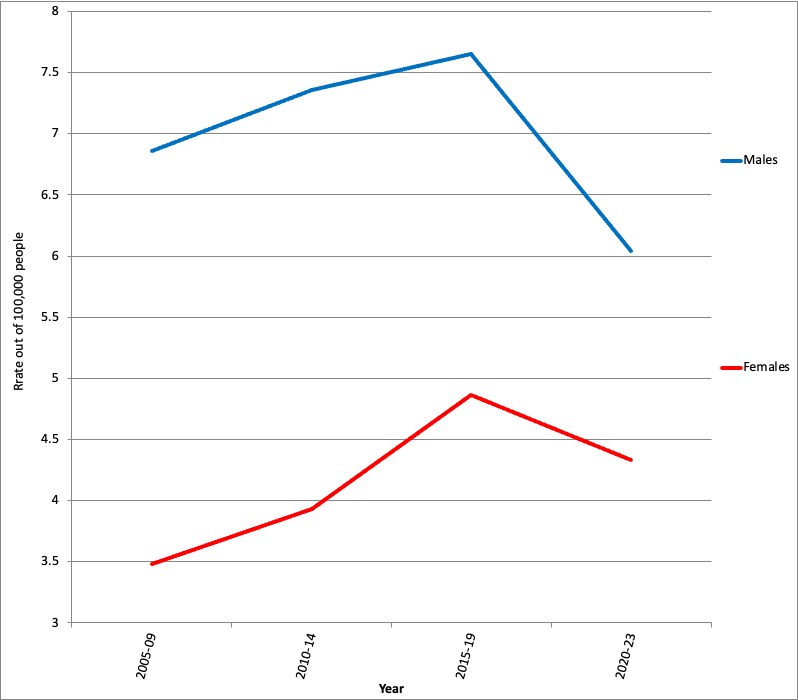
Figure 2: Suicide rates of 10- to 19-year-olds, Canada, by sex, 2005-2023

Highclere Castle, Hampshire, England
In England and Wales, the suicide rate of 15- to 19-year-old girls increased 66% between 2005-09 and 2015-19, remaining 60% higher in 2020-24 (see Figure 3). For boys, the suicide rate rose 42% from 2005-09 to 2020-24.
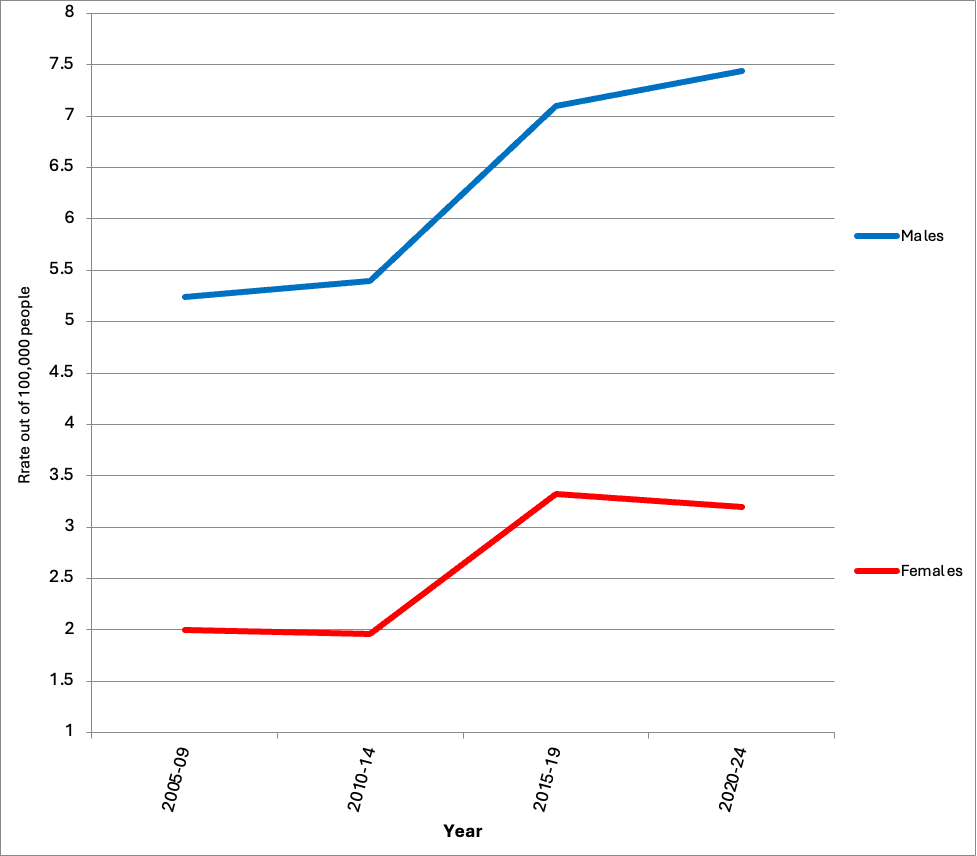
Figure 3: Suicide rates of 15- to 19-year-olds, England and Wales, by sex, 2005-2024
So across three English-speaking countries, the trend in suicide rates for adolescent girls is virtually identical: It rises from the late 2000s to the late 2010s and then declines slightly into the early 2020s. Something is compromising the mental health of adolescent girls, and the pandemic and post-pandemic years produced only a little relief. There is less consistency across countries in the suicide rates for adolescent boys, with increases but substantial backing off in Australia, decreases in Canada, and increases in England and Wales.
This is similar to the data from Europe and Asia, where increases in the adolescent suicide rate were more evident for girls than for boys. In Japan, the suicide rate for adolescent girls is now equal to that for boys, a reversal of a decades-long pattern. Although the suicide rate for boys in Australia, Canada, and the UK is still much larger than it is for girls, boys’ suicide rates have declined in Australia and Canada in the last 5 years. Whether it’s due to improvements in suicide prevention programs or other cultural changes, there’s been good news for the suicide rates for boys. The same is not as true for girls, suggesting we have further to go to help them.