

The first evidence we had for the impact of smartphones and social media was for teens’ lives outside of school. Teens were spending less time hanging out with their friends, less time sleeping, and more time on screens, often holed up alone in their bedrooms. That’s not a good formula for mental health, and sure enough, teen depression doubled as smartphones and social media took over after 2012.
But what about during school, where teens spend more than 30 hours a week? Those hours, too, are filled with technology. Sometimes that’s for truly educational purposes – they’re working on an essay for English class, reading a science textbook in an online library, or taking notes in class.
But not always. Even school-issued laptops often allow access to YouTube and streaming (like Netflix, Disney+, and Peacock), allowing students to sit in the back of class and watch endless hours of entertainment. Others play games. Personal smartphones are also a huge distraction: A recent analysis found that American teens spend more than an hour using their phones during the school day, and almost none of that time is spent on educational activities. Instead, teens scroll through social media, watch videos, and play games. Some take videos of their peers without permission, or sneak off to the bathroom to watch TikToks.
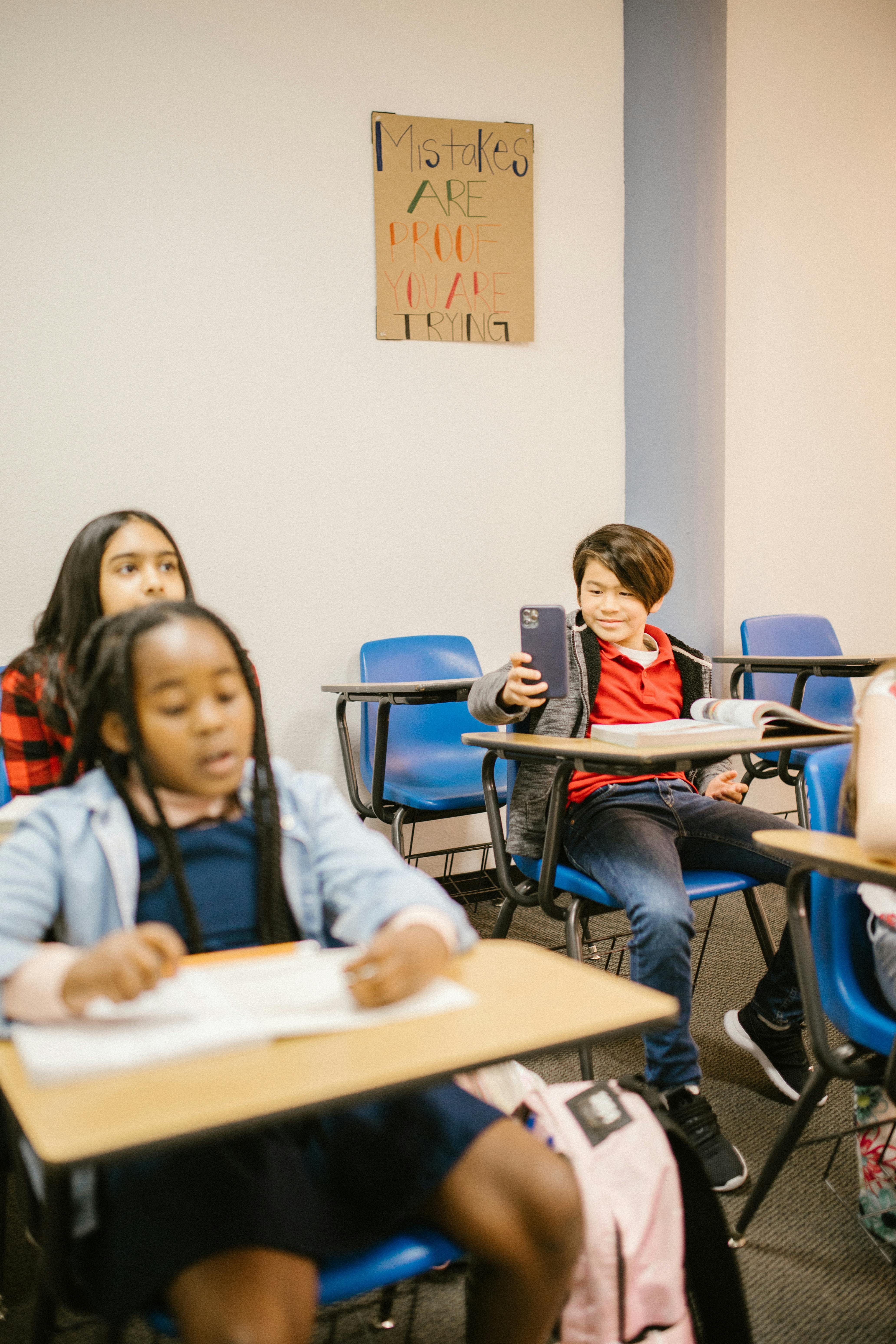
Thus, teens are spending about 20% of their time at school not focusing on schoolwork or talking to their peers. That may be one reason why standardized test scores in math, reading, and science have declined since 2012 and why students have increasingly reported feeling lonely at school. Electronic devices are both distracting in the classroom and isolating in the lunchroom. What impact does that have on teens’ learning and on their mental health?
In a recent paper, my students and I looked into these issues in the PISA dataset of 15- and 16-year-olds around the world. In 36 countries, students consistently took standardized tests in math, reading, and science between 2006 and 2022. In 2022, they were asked how much time they spent using electronic devices (like phones, tablets, and laptops) for leisure purposes (like social media or entertainment) during the school day. This varied quite a bit across countries, with students in some countries spending hardly any time on devices for leisure during the school day, and others spending an average of more than two hours.
In countries where students spent a lot of time using devices for leisure during the school day, test scores plummeted between 2012 and 2022. In countries where they spent less time, test scores merely slid. Thus there was a significantly larger decline in scores in the countries where students spent more time using devices for fun during school hours (see Figure 1).
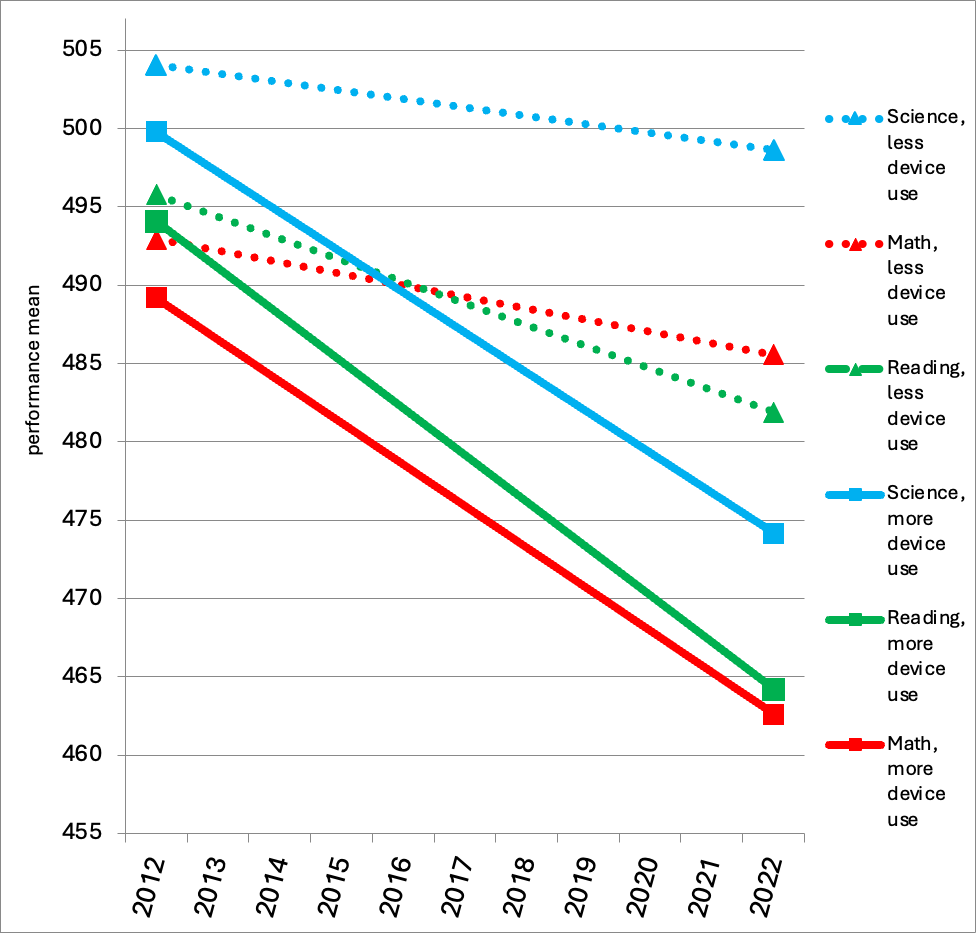
Figure 1: Scores on standardized tests of math, reading, and science for 15- and 16-year-olds in 36 countries, by low or high use of electronic devices for leisure during the school day. Note: Controlled for GDP per capita. Source: Twenge (2025) using data from PISA.
The consequences of device use aren’t just academic – they are also social and emotional, because device use has displaced students talking to each other during lunch and breaks. In countries where students spend more time using devices for leisure during the school day, the percentage of students who agreed “I often feel lonely at school” rose steeply, with the increase much less pronounced in countries with less leisure device use during school (see Figure 2).
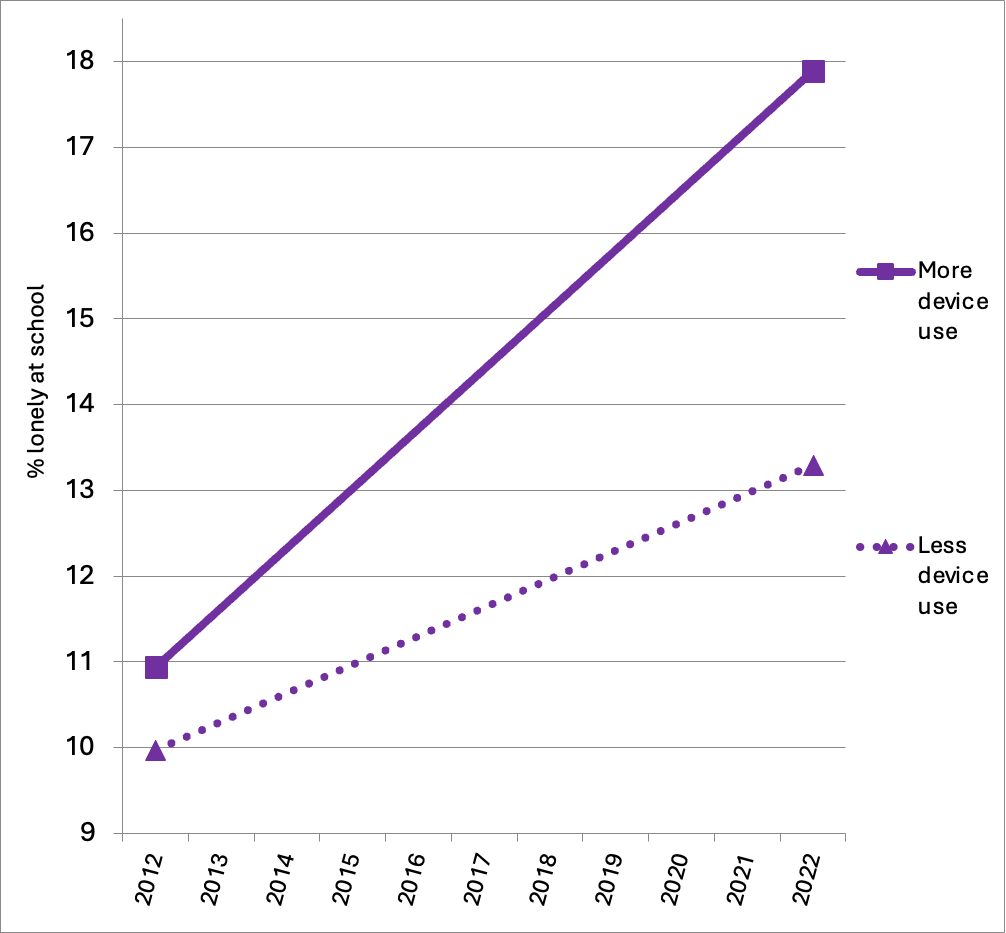
Figure 2: Feelings of loneliness at school among 15- and 16-year-olds in 36 countries, by low or high use of electronic devices for leisure during the school day. Note: Controlled for GDP per capita. Source: Twenge (2025) using data from PISA.
These results show the twin impacts of the leisure use of devices during the school day: Declines in test scores and increases in feeling lonely at school. They are another piece of evidence suggesting that schools should restrict students’ use of smartphones from bell to bell – not just during class, but also during lunch, breaks, and passing periods. A school where students are talking to each other is less lonely. I recently visited a school with a bell to bell no phone policy, and students are now talking, playing cards, and “bedazzling” (had to look that up!) with each other instead of being endlessly absorbed in their phones.
Of course, phones are only part of the problem. The next step is to lock down laptops and tablets so they, too, aren’t being used for social media and entertainment during the school day. Or, especially for younger students, it may be time to go back to paper and pencil – old-school, yes, but with the bonus of no binge-watching YouTube videos during chemistry class. Some states are considering bills outlawing or restricting the use of devices for elementary school students — a welcome step.
Sticking with the status quo means lower test scores and more lonely students — not the outcome any of us want.
p.s. I worked with some truly wonderful undergraduates on the PISA project, which at times seemed endless due to the complexity of the tables (data collected over 22 years across 36 countries). My heartfelt thanks to Spencer Deines, Ellah Fessenden, Lauren Gramse, Julia Lima, Elisa Ruiz, Siri Sommer, and M’Lise Venable. (With a special shout-out to M’Lise’s cats for their starring role).
Thank you for this article. The Educational Tech industry (EdTech) has fought hard to have kids use screens during the day--both phones and laptops. The selling point is that kids will supposedly be able to access remarkable learning opportunities. However, good sense, our own eyes, and research tell us that kids are distracted by screens and phones during the school day--which hurts learning success and emotional well-being. Rather than be sold on EdTech promises, we should look to schools where the tech elite and wealthy send their kids. The human connection and small class size are emphasized, which is what research says helps kids learn and be emotionally healthy.
The loneliness data may be the most concerning part of this.
If 20% of the school day is spent in leisure device use, that’s 20% less embodied social experience.
Adolescence is when the need to matter to peers intensifies.
When that need is routed through devices rather than real-life interaction, significance becomes measured rather than felt.
To me, that explains why loneliness rises even in physically crowded environments...